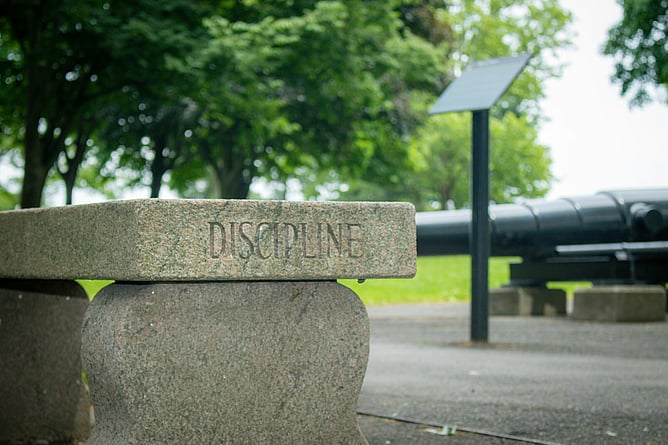
The Discipline Dividend: Why Reliability Matters More as Pressure Increases
Leaders don’t struggle because they lack ambition, intelligence, or care. What has changed is the environment they are leading in. Increased complexity, faster decision cycles, constant information flow, and the acceleration introduced by AI mean that pressure now arrives earlier and lingers longer.
In this context, execution becomes unreliable not because people are unwilling, but because cognitive and emotional load increases. Performance stops being about intent alone and becomes about the capacity to act with clarity and consistency when conditions are demanding.
This is where discipline matters—not as rigidity or control, but as practised reliability. Discipline is what allows leaders and teams to convert intent into action repeatedly, even as circumstances shift. For executives, GMs, and operational leaders, this is not just about short-term results. It is about sustained performance: finishing work, learning from it, and improving how the next cycle is approached.
Progress is built on what is completed, reflected on, and refined—not just what is begun.
The Reality Check
Two assumptions quietly erode performance in complex environments.
“High motivation leads to high performance.”
Motivation helps people start. It rarely helps them persist. Value is created in the follow-through—staying with work through uncertainty, adjusting when it doesn’t go to plan, and completing cycles of action and learning. Discipline is what holds attention long enough for improvement to occur.
“Discipline stifles creativity.”
In practice, discipline protects it. When foundational behaviours are reliable, leaders and teams have the capacity to experiment, adapt, and fail forward without losing coherence. Discipline does not remove challenge; it creates enough stability to engage with it deliberately.
What’s Actually Happening
Discipline builds capacity under load. Through repeated practice, behaviour becomes familiar and dependable. This reduces unnecessary cognitive negotiation and preserves attention for what genuinely requires judgment. Discipline preserves performance under pressure by offloading routine decisions, protecting cognitive bandwidth for judgment, adaptation, and learning when conditions are most demanding.
Under sustained pressure, motivation fluctuates. Disciplined behaviours persist because they are practised, not because they are easy. Over time, this builds resilience—the ability to absorb disruption, recover quickly, and continue acting with intent.
Individuals experience this as steadiness under pressure. Teams experience it as trust. Organisations experience it as adaptability that does not collapse when conditions change.
The Decision Shift
In many organisations, leadership effort is spent managing energy: incentives, urgency, micromanagement, or performance correction after the fact. Discipline shifts the decision in a more constructive direction.
Instead of asking How do we push harder? leaders ask:
What practices help us keep acting with clarity, integrity, and courage when it would be easier not to?
This reframes leadership choices:
From managing behaviour to building capability
From controlling outcomes to strengthening follow-through
From avoiding failure to learning quickly and visibly
Discipline is not about removing challenge. It is about remaining effective inside it.
From Individual to Organisation
Discipline begins with the leader’s strengths: how they prepare, how they follow through, and how they return to standards after disruption. Teams interpret this as permission—to be honest, to learn, and to hold one another to account without blame.
Over time, shared discipline becomes shared confidence. Teams develop reliable ways of working. Organisations build cultures where challenge does not fracture performance and learning does not require failure to be hidden.
This is how discipline integrates with resilience, trust, and high performance rather than standing alone.
What the Evidence Shows
Elite practitioners reinforce this view. Rich Diviney describes discipline as both internal—governing one’s own responses—and external—maintaining focus amid environmental volatility. Mark Divine frames discipline as a trainable practice, built through daily habits of excellence that allow leaders to act consistently regardless of circumstance.
Both perspectives align on a critical point: discipline is developed, not inherited. It scales from individual reliability to team trust and organisational performance. Habitual follow-through is what allows people and teams to perform under pressure without losing clarity or purpose.
The Practical Standard
The standard is not intensity. It is consistency with intent.
Disciplined organisations identify a small number of behaviours that matter most and practise them deliberately. These behaviours are reviewed, adapted, and strengthened over time. They provide a stable base from which people can take risks, learn, and enter states of high performance and flow more reliably.
The question is not whether work feels easy.
The question is whether people can keep acting in alignment with what matters when it is hard.
Closing
The discipline dividend is realised when performance becomes reliable under pressure and adaptable under change. It shows up as sustained output, faster learning cycles, and the conditions for flow—where attention is focused, effort is absorbed, and teams perform at their best without burning out.
Discipline is what makes flow repeatable rather than accidental. It creates the stability that allows learning, resilience, and trust to compound over time.
For leaders, the question is not how to generate more motivation. It's where greater discipline would improve execution, learning, and performance.
That is the work.
Practised daily. Tested under pressure.
Peter Makara
Founder, Be Uncommon
Leadership & Performance Practitioner